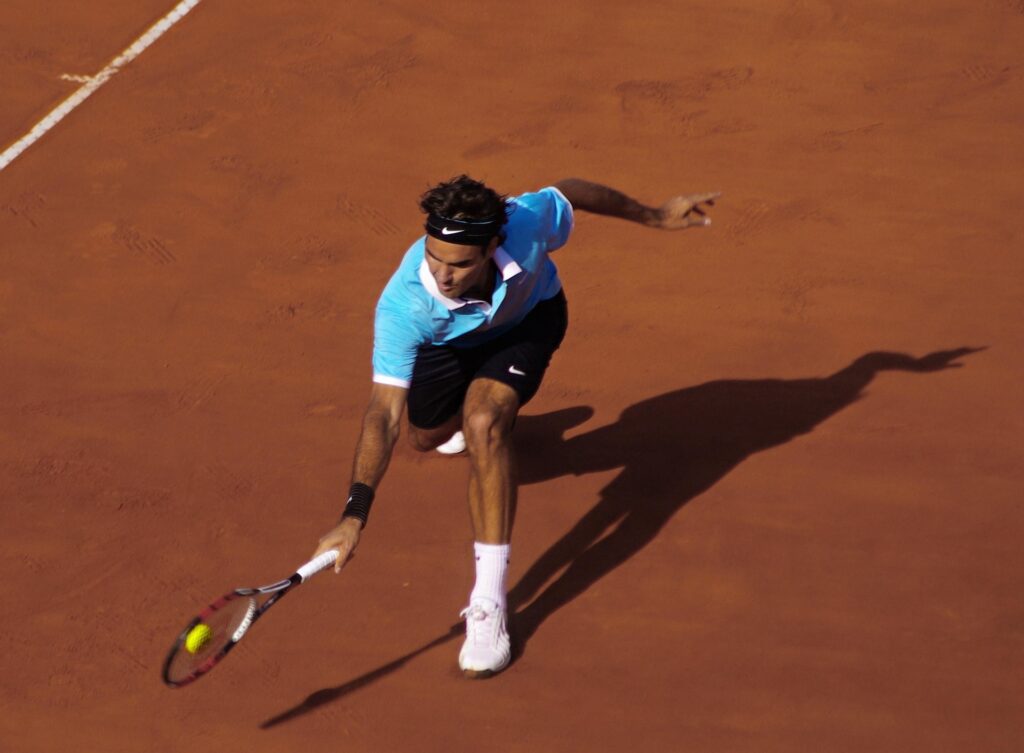
Roger Federer has added another line to the most commercially successful résumé in tennis history. According to Forbes, the 20-time major champion has joined the 2026 World’s Billionaires List with an estimated net worth of about $1.1 billion, making him one of a small number of athletes to cross that threshold. ATP Tour’s report framed it as another Federer milestone. The more important story is what it says about the modern economics of tennis stardom. The title of ‘roger federer billionaire’ highlights his journey beyond just tennis.
Federer’s career earnings on court were extraordinary, but billionaire status was never going to come from prize money alone. This is the final expression of a model he helped define: elite performance as the foundation, global marketability as the multiplier, and long-term business positioning as the real wealth engine. In Federer’s case, that meant converting sustained excellence into one of the most valuable personal brands in global sport.
The raw tennis résumé still matters because it is the asset underneath everything else. Federer won 20 major singles titles, spent 310 weeks at World No. 1, including 237 consecutive weeks, captured 28 ATP Masters 1000 titles, and won the ATP Finals six times. Those numbers built the credibility. The commercial machine came after.
What separates Federer from almost every player in history is not just greatness. It is durability at the premium end of the endorsement market. For years, he operated less like a retired athlete-in-waiting and more like a multinational luxury property. Even late in his career, he remained one of the most sponsor-friendly figures in sport: global, multilingual, low-volatility, and attached to a version of tennis that brands were comfortable paying top dollar to be associated with. That profile is rare. In tennis, it may be unique.
His inclusion alongside names like LeBron James and Tiger Woods also reinforces a broader truth about athlete wealth in 2026: billionaire status is increasingly being built outside the competitive arena. Salaries and prize money still matter, but the real gap is created through equity, licensing, private business interests, and endorsement structures that continue producing value long after a player stops competing. Federer did not just maximise his tennis career. He built a post-tennis financial architecture before retirement was fully in view.
That matters for tennis because the sport has always produced globally recognisable stars, but far fewer true business empires than basketball, golf, or football. Federer became the exception. He showed that a tennis player could move beyond being a high-paid athlete and become a long-duration commercial platform. For younger players and their management teams, that is the real case study here. Not the billion-dollar headline itself, but the structure beneath it.
There is also an uncomfortable contrast embedded in the news. At the top of the sport, Federer’s wealth underlines just how powerful tennis can be as a branding vehicle. Below that level, the financial realities are far less glamorous. The sport remains one of the most unequal in global professional athletics, with a handful of stars capable of generating enormous commercial value while much of the player population still struggles with the cost of operating on tour. Federer’s billionaire status is a triumph of individual positioning. It is not evidence of a healthy economic system for the sport as a whole.
Federer was back in the tennis spotlight again this January at the Australian Open, where he took part in an exhibition doubles appearance alongside Andre Agassi, Patrick Rafter, and Lleyton Hewitt. Even in retirement, he remains commercially magnetic and institutionally central to the sport’s image. That, more than anything, is why this news feels inevitable. Federer has not just remained relevant after tennis. He has remained monetisable at the highest possible level.
The Bottom Line
Roger Federer becoming a billionaire is not just a celebrity wealth story. It is the clearest proof yet that in modern tennis, the biggest fortunes are built where performance, prestige, and business sophistication intersect. Federer mastered all three. The result is not simply another milestone. It is the most complete off-court victory of his career.
Tim Lee is the founder of Baseplay Tennis and head coach at Baseplay Tennis Academy in Singapore.
